See how fire sprinklers protect schools - and why they matter more than ever.


Posted on
January 27, 2026
By
Fire safety in schools is about protecting lives, safeguarding education, and preserving vital community assets. Every year in the UK, fire and rescue services attend numerous incidents in educational settings — and while most don’t result in fatalities due to effective evacuation procedures, the impact on pupils, teachers, staff and buildings can be profound if active fire protection systems aren’t in place.
One of the most effective ways to reduce that impact is through automatic fire sprinkler systems, which can control or suppress fires in their earliest stages — long before they spread. In parts of the UK such as Wales and Scotland, automatic fire sprinkler systems are already mandatory in all new school buildings.
A recent sprinkler activation at a London primary school provides powerful evidence of how effective these systems can be. On 23 August 2025, a fire broke out within a timber-framed extension on the third floor of a primary school building. One sprinkler head activated in the area of origin, helping to contain the fire and prevent it from spreading further. Firefighters then worked with the system in place to fully extinguish the blaze. No injuries were reported.
This incident highlights how automatic sprinkler systems can limit damage, support firefighting efforts, protect people and reduce interruption to pupils’ learning.

The approach to sprinkler installation in UK schools varies by nation:
This means that in Wales and Scotland, children, teachers and staff in newly built schools benefit from a higher standard of active fire protection by default.
Automatic fire sprinkler systems offer several key advantages in school environments:
Early Fire Control and Suppression
Sprinklers activate individually where heat from a fire triggers the system, often containing or significantly slowing fire spread before it grows.
Protecting Pupils and Staff
By controlling fire early, sprinklers reduce smoke and heat — meaning safer evacuation and reduced risk of injury for occupants and firefighters responding to the scene.
Minimising Disruption to Education
Where sprinkler systems operate effectively, damage to buildings and resources is limited, helping schools return to normal sooner and reducing the need for temporary relocation.
Protecting School Resources and Community Value
Schools are more than bricks and mortar — they are community hubs with teaching materials, equipment, records and irreplaceable student work. Sprinklers help preserve these assets.
Despite the successful operation of sprinklers in multiple school fire events reported across the UK, England still lags behind its neighbours in terms of mandatory protection. Fire safety experts including the National Fire Chiefs Council have long advocated wider use of sprinklers in schools, noting that fires can occur at any height or size of building and are not limited to tall structures.
The evidence — from Wales, Scotland and cases like the London primary school activation — consistently shows that systems work as intended and provide significant protection benefits.
In schools, where the safety of children and staff is paramount, automatic fire sprinkler systems are more than just a fire protection measure — they are peace of mind, resilience and a practical investment in community safety.
With mandatory sprinkler requirements already in place in Wales and Scotland, the UK has a strong foundation to build on. Real-world activations like the London primary school incident underline why fire sprinklers deserve a central role in every school’s fire safety strategy.
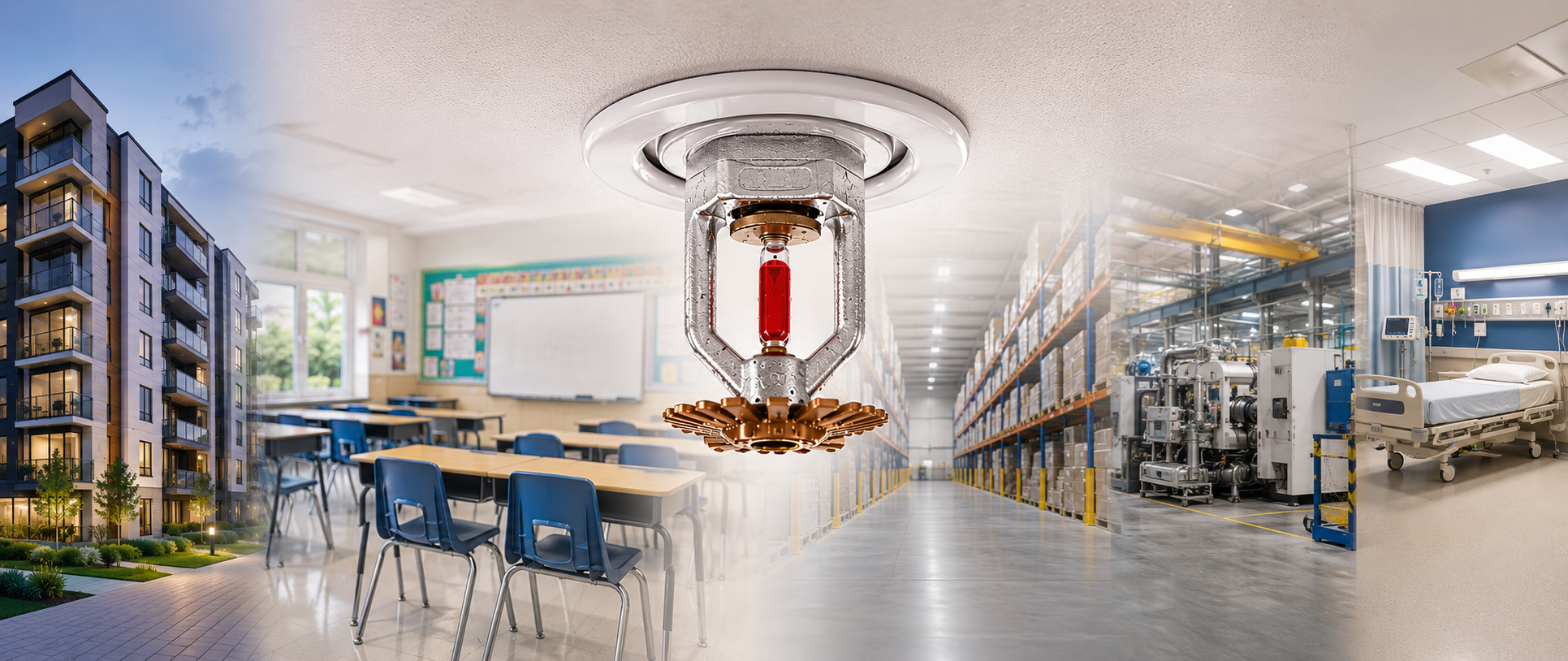
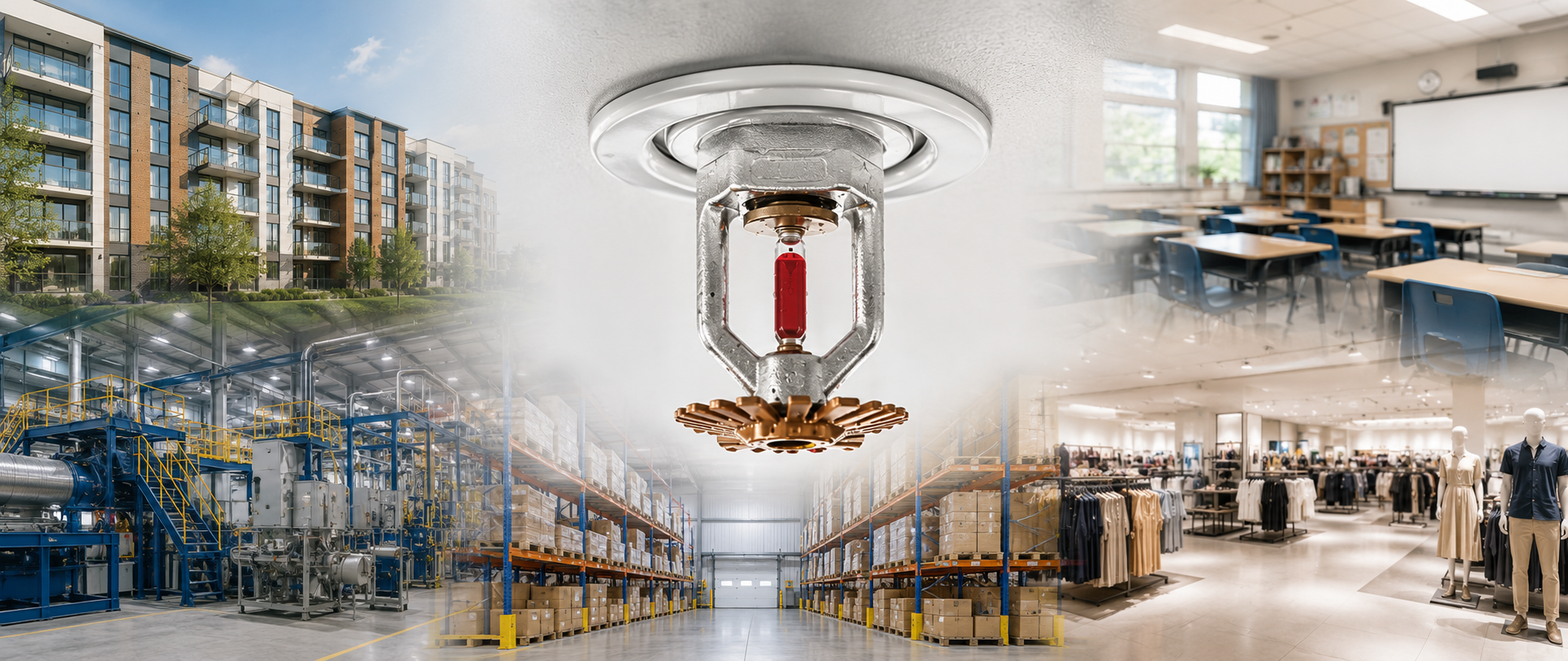
To learn more about how we design and install fire sprinkler systems across education and other key environments, explore the sectors we work in. From schools and warehouses to large commercial buildings, we tailor fire protection to suit each setting.
Fire safety in schools is about protecting lives, safeguarding education, and preserving vital community assets. Every year in the UK, fire and rescue services attend numerous incidents in educational settings — and while most don’t result in fatalities due to effective evacuation procedures, the impact on pupils, teachers, staff and buildings can be profound if active fire protection systems aren’t in place.
One of the most effective ways to reduce that impact is through automatic fire sprinkler systems, which can control or suppress fires in their earliest stages — long before they spread. In parts of the UK such as Wales and Scotland, automatic fire sprinkler systems are already mandatory in all new school buildings.
A recent sprinkler activation at a London primary school provides powerful evidence of how effective these systems can be. On 23 August 2025, a fire broke out within a timber-framed extension on the third floor of a primary school building. One sprinkler head activated in the area of origin, helping to contain the fire and prevent it from spreading further. Firefighters then worked with the system in place to fully extinguish the blaze. No injuries were reported.
This incident highlights how automatic sprinkler systems can limit damage, support firefighting efforts, protect people and reduce interruption to pupils’ learning.
The approach to sprinkler installation in UK schools varies by nation:
This means that in Wales and Scotland, children, teachers and staff in newly built schools benefit from a higher standard of active fire protection by default.
Automatic fire sprinkler systems offer several key advantages in school environments:
Early Fire Control and Suppression
Sprinklers activate individually where heat from a fire triggers the system, often containing or significantly slowing fire spread before it grows.
Protecting Pupils and Staff
By controlling fire early, sprinklers reduce smoke and heat — meaning safer evacuation and reduced risk of injury for occupants and firefighters responding to the scene.
Minimising Disruption to Education
Where sprinkler systems operate effectively, damage to buildings and resources is limited, helping schools return to normal sooner and reducing the need for temporary relocation.
Protecting School Resources and Community Value
Schools are more than bricks and mortar — they are community hubs with teaching materials, equipment, records and irreplaceable student work. Sprinklers help preserve these assets.
Despite the successful operation of sprinklers in multiple school fire events reported across the UK, England still lags behind its neighbours in terms of mandatory protection. Fire safety experts including the National Fire Chiefs Council have long advocated wider use of sprinklers in schools, noting that fires can occur at any height or size of building and are not limited to tall structures.
The evidence — from Wales, Scotland and cases like the London primary school activation — consistently shows that systems work as intended and provide significant protection benefits.
In schools, where the safety of children and staff is paramount, automatic fire sprinkler systems are more than just a fire protection measure — they are peace of mind, resilience and a practical investment in community safety.
With mandatory sprinkler requirements already in place in Wales and Scotland, the UK has a strong foundation to build on. Real-world activations like the London primary school incident underline why fire sprinklers deserve a central role in every school’s fire safety strategy.
To learn more about how we design and install fire sprinkler systems across education and other key environments, explore the sectors we work in. From schools and warehouses to large commercial buildings, we tailor fire protection to suit each setting.









.png)



























.png)


.png)


.png)


.svg)